

Security
Reduce Vulnerability Exposure
Deploy security patches faster to minimize attack surface and reduce cyber risk.
↓70%attack surface exposure

Continuously discover, prioritize, test, deploy, and verify operating system and third-party application patches across Windows, macOS, Linux, and remote devices using AI-powered patch intelligence and autonomous remediation.

Manage remote teams, data center devices, or cloud-hosted endpoints with Trinetri in real time. Ensures optimum patch compliance and keeps you stay ahead of threats with AI-powered insights.
Automate patching for thousands of business-critical applications from a single platform.
Accelerate patch discovery, testing, approval, and deployment with intelligent automation.
Eliminate repetitive patching tasks through AI-driven workflows and autonomous operations.
Track patch status, deployment progress, and compliance across all endpoints in real time.
Traditional patch management is slow, fragmented, and difficult to scale. EndpointOps combines AI-powered patch intelligence, autonomous remediation, and enterprise-grade deployment controls to help organizations patch faster, reduce vulnerabilities, improve compliance, and strengthen endpoint security.
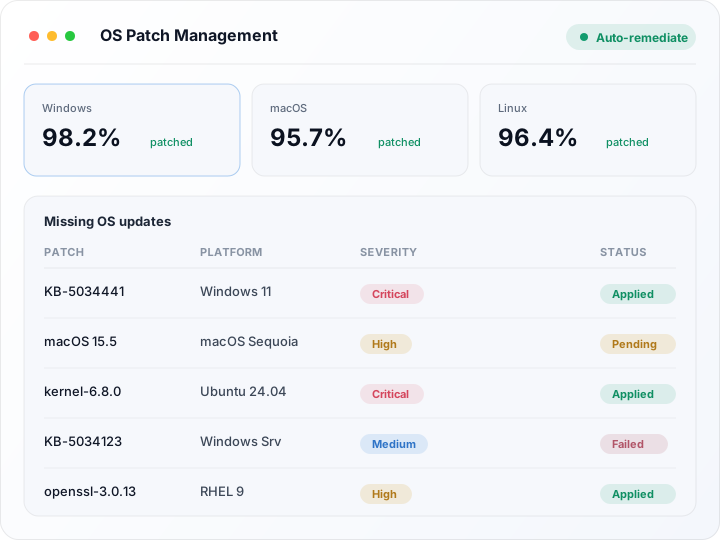
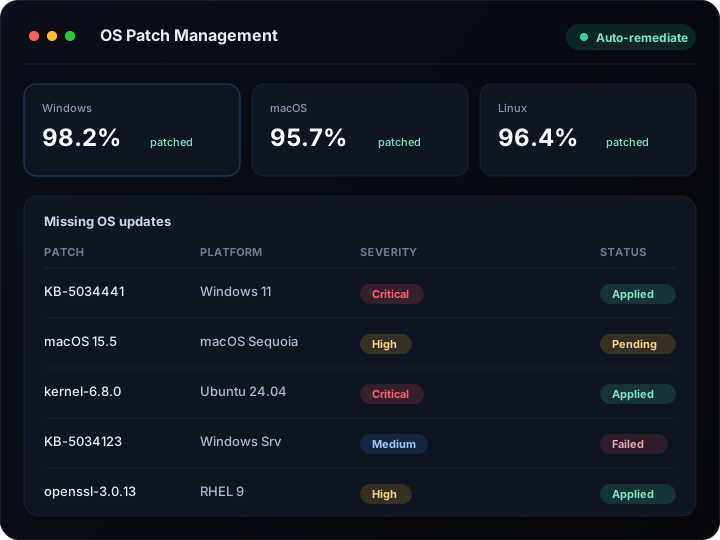
Deploy, manage, and monitor operating system updates across Windows, macOS, and Linux from a centralized console. Continuously identify missing patches and automate remediation to reduce security exposure and maintain endpoint security.
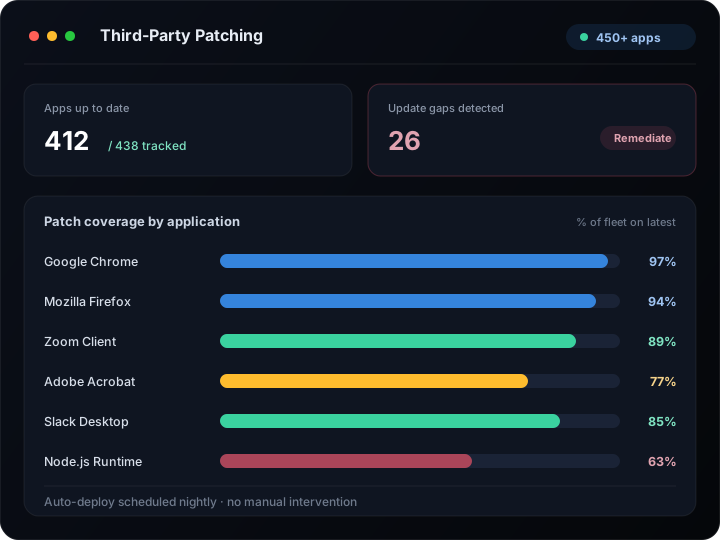
Automate patch deployment for browsers, collaboration tools, productivity suites, developer tools, and other business-critical applications. Ensure third-party software remains secure, compliant, and up to date without manual intervention.
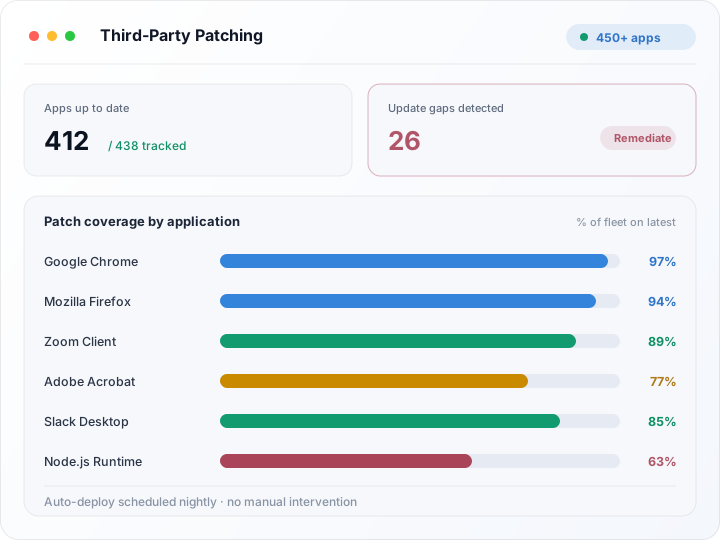
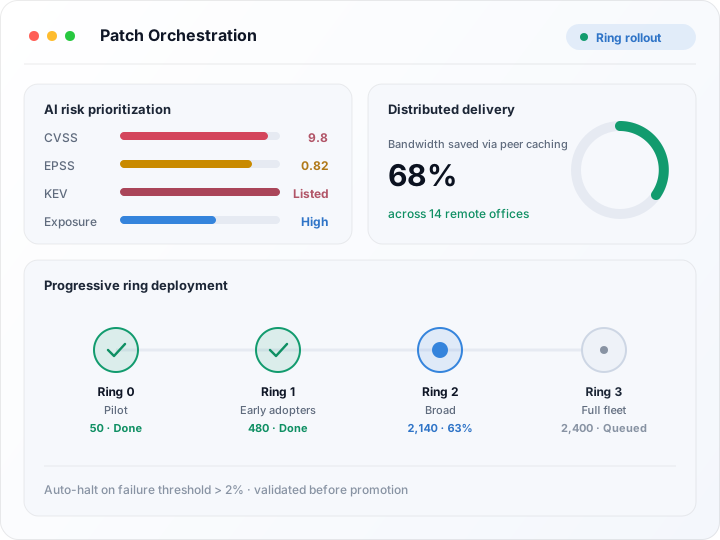
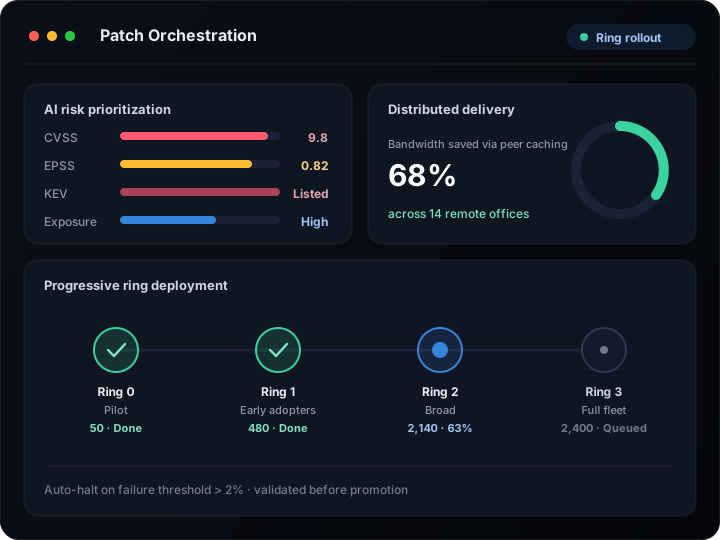
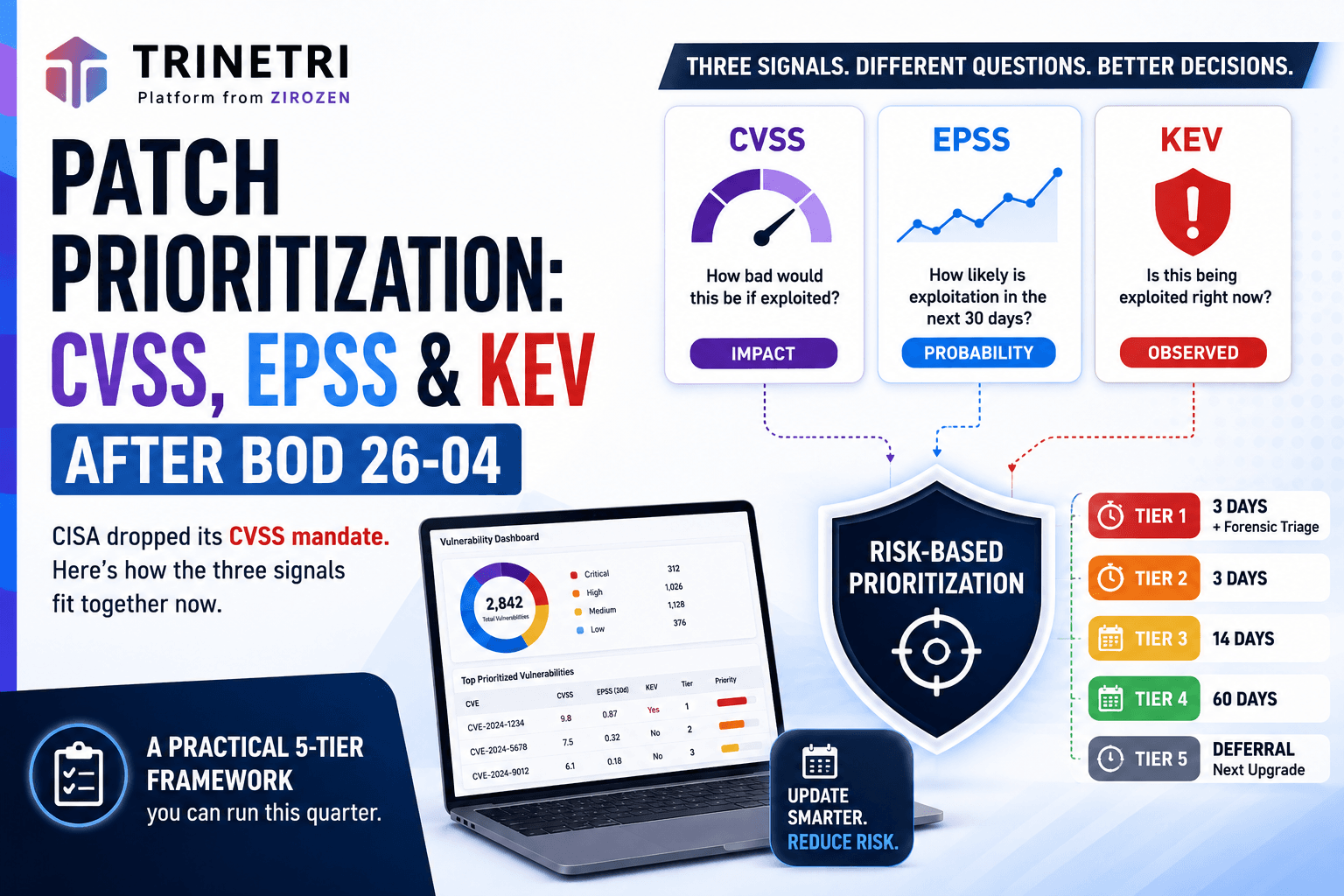
AI analyzes CVE severity, CVSS scores, EPSS exploit probability, KEV intelligence, threat intelligence, business impact, and endpoint exposure to prioritize high-risk patches. Progressive ring-based deployment enables organizations to validate updates on pilot groups before broad rollout, while distributed patch delivery optimizes bandwidth utilization for remote offices and hybrid workforces.
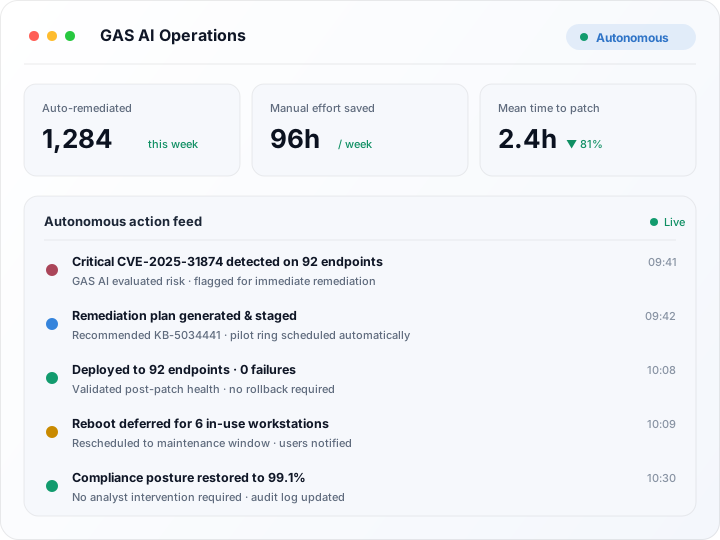
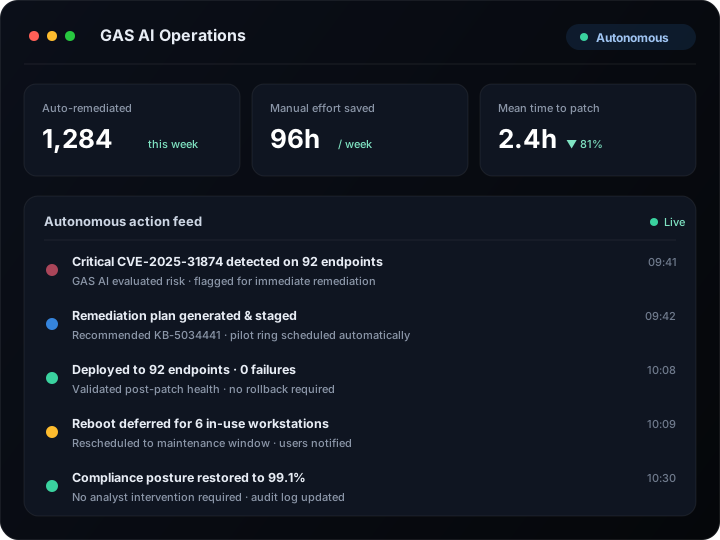
GAS AI continuously identifies missing patches, evaluates risk, recommends remediation strategies, and automates deployment workflows. Transform patch management from a manual process into an autonomous security operation that continuously reduces risk.
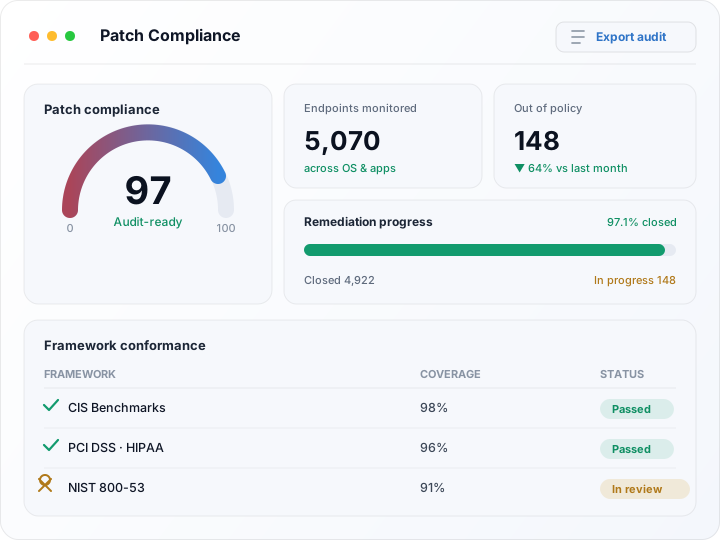
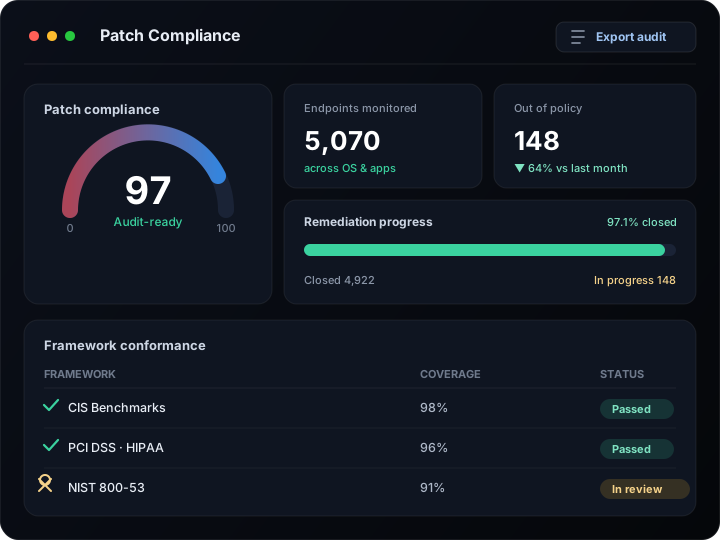
Monitor patch status across operating systems and third-party applications to ensure compliance with CIS Benchmarks, PCI DSS, HIPAA, NIST, and internal security policies. Generate audit-ready reports and track remediation progress from a single dashboard.
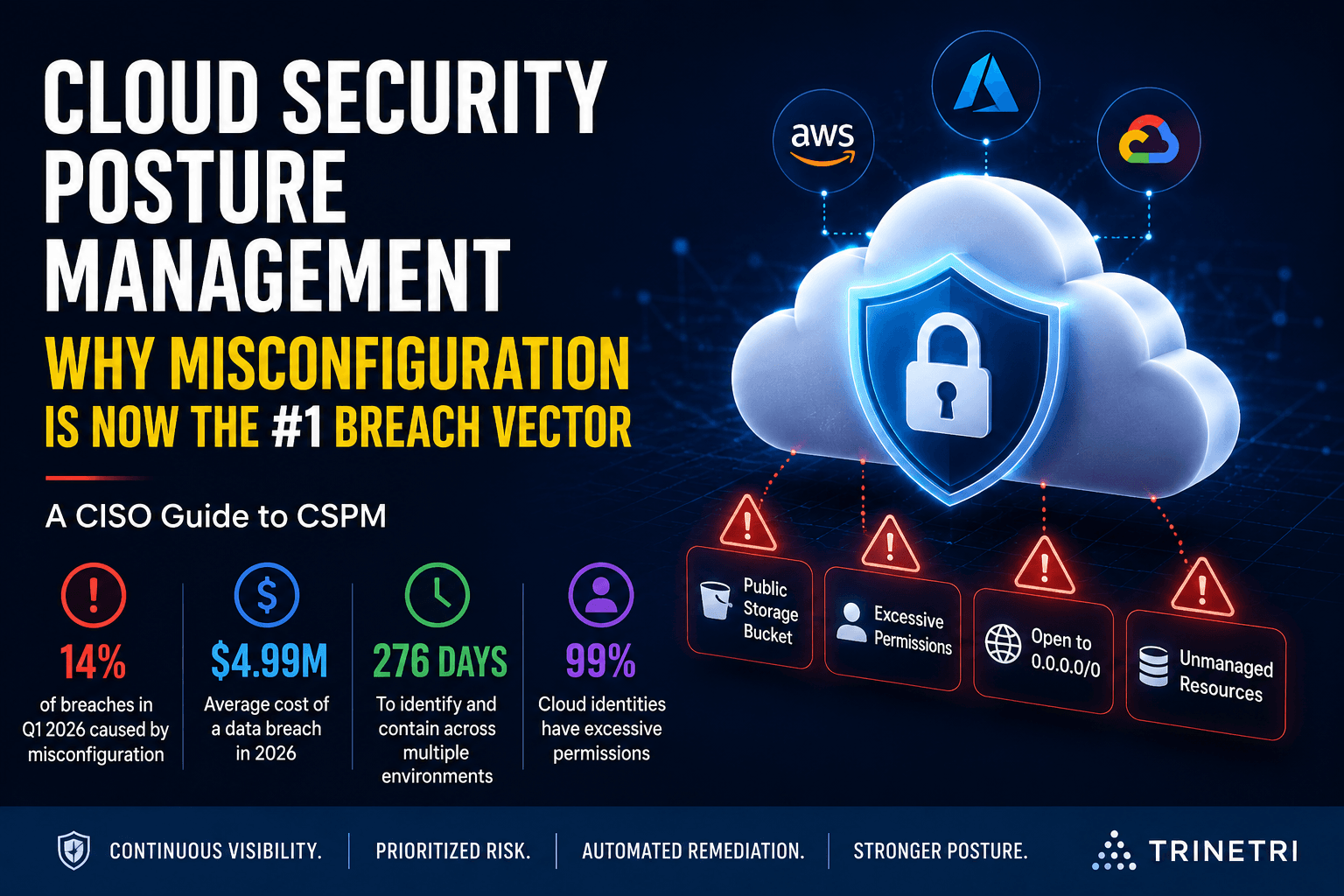
Unpatched software is the #1 entry point for attackers. Continuous, risk-based patching turns a reactive scramble into automated, measurable outcomes.
Deploy security patches faster to minimize attack surface and reduce cyber risk.
Ensure remote devices receive critical updates regardless of location.
Maintain compliance with internal policies and industry regulations through automated patch enforcement.
Keep thousands of business applications updated without manual effort.
Prioritize and deploy patches for actively exploited vulnerabilities before attackers can take advantage.
Rapidly identify, prioritize, and deploy critical patches for newly disclosed vulnerabilities before they can be exploited.
Powerful capabilities to secure, manage and automate your entire endpoint environment.
Automate OS and third-party patching to eliminate vulnerabilities and keep your endpoints secure and up to date.
Automated Patching
Ring Deployment
Patch Policies
Rollback & Recovery
Detailed Reporting
Frequently Used Together
These features work even better together to deliver maximum security and efficiency.
by bringing together other tools
Empower your business with a rich ecosystem of integrations that unify operations, automate processes, and enhance productivity.
Expert guidance, product updates, and best practices for autonomous IT & security operations.
Move from slow, manual patch cycles to intelligent, risk-based patch management.
Traditional
Patch Management
AI-Powered
Patch Management
Manual patch approval
Every patch requires manual review before rollout.
AI-assisted prioritization
AI ranks patches by risk and business impact.
Static deployment schedules
Fixed windows delay critical fixes.
Risk-based deployment
Patches roll out based on real-time exposure.
Reactive patching
Fixes happen only after issues are flagged.
Autonomous remediation
Patches are applied automatically as risk is detected.
Multiple tools
Disconnected systems make patching hard to track.
Unified platform
One platform handles detection, approval, and deployment.
Basic reporting
Limited visibility into patch status and coverage.
Real-time intelligence
Live visibility into patch posture across every endpoint.
High operational effort
Manual coordination increases workload and delays.
Automated workflows
End-to-end automation reduces effort and accelerates fixes.
Patch management is the process of identifying, testing, deploying, and verifying software updates to fix vulnerabilities, improve performance, and maintain system security.
Patch management helps organizations reduce cyber risk, prevent exploitation of known vulnerabilities, improve compliance, and maintain endpoint security.
Patch management focuses on deploying software updates to remediate vulnerabilities, while vulnerability management identifies, prioritizes, and tracks security risks throughout their lifecycle. Together, they help organizations reduce cyber risk and strengthen security posture.
Third-party patch management automates updates for non-operating system applications such as browsers, collaboration tools, PDF readers, developer tools, and productivity software.
AI helps prioritize patches using CVE severity, CVSS scores, EPSS exploit probability, KEV intelligence, business impact, and threat intelligence while automating deployment and remediation workflows.
Ring-based patch deployment allows organizations to test updates on a small group of devices before deploying them organization-wide, reducing the risk of outages and compatibility issues.
Yes. EndpointOps provides centralized patch management for Windows, macOS, Linux, servers, and remote endpoints from a single console.
EndpointOps supports automated patching for more than 4,000 third-party applications across multiple software categories.
Yes. Timely patch deployment closes known security vulnerabilities that ransomware operators commonly exploit to gain access to systems and networks.
Yes. Automated patch management helps organizations meet security and compliance requirements by ensuring systems remain updated and protected against known vulnerabilities.