

Security
Vulnerability Remediation
Auto-detect and remediate critical vulnerabilities.
↓65%critical vulnerabilities open

Control device access, block unauthorized applications, enforce security policies, and protect sensitive data across every endpoint with centralized policy management and autonomous security operations.

Manage remote teams, data center devices, or cloud-hosted endpoints with Trinetri in real time. Ensures optimum patch compliance and keeps you stay ahead of threats with AI-powered insights.
Monitor and control removable media, external devices, applications, and endpoint security policies.
Apply security controls instantly across managed endpoints.
Prevent unauthorized device usage, software execution, and data exfiltration attempts.
Detect policy violations, analyze risk, and automate remediation workflows.
Unmanaged devices, unauthorized applications, and insecure configurations create opportunities for data loss, compliance violations, and cyberattacks. EndpointOps provides centralized device control and security policy enforcement to help organizations protect sensitive data, reduce risk, and maintain compliance.
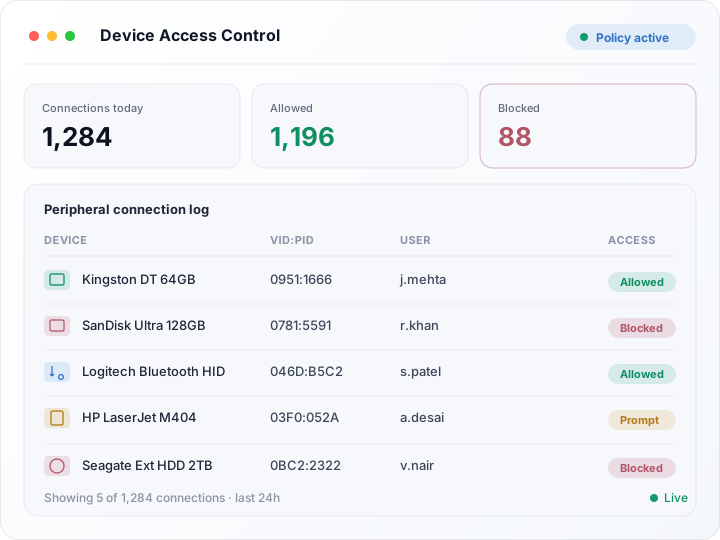
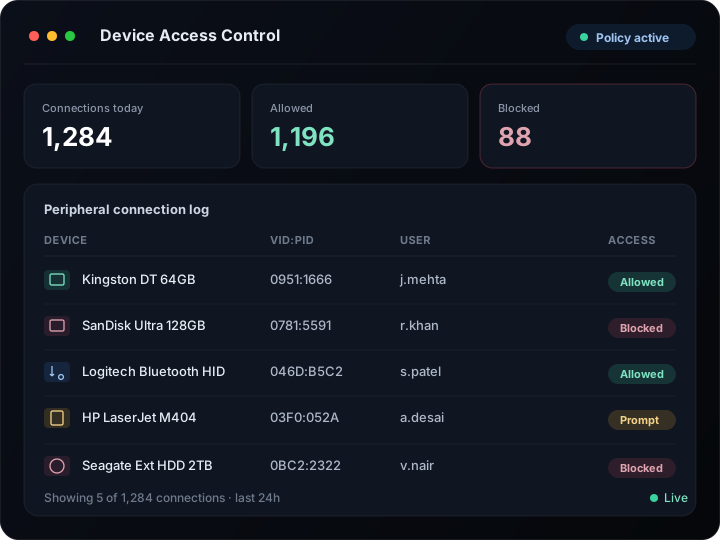
Prevent unauthorized device usage and reduce data exfiltration risks by controlling access to USB drives, external storage devices, printers, Bluetooth devices, and other peripherals.
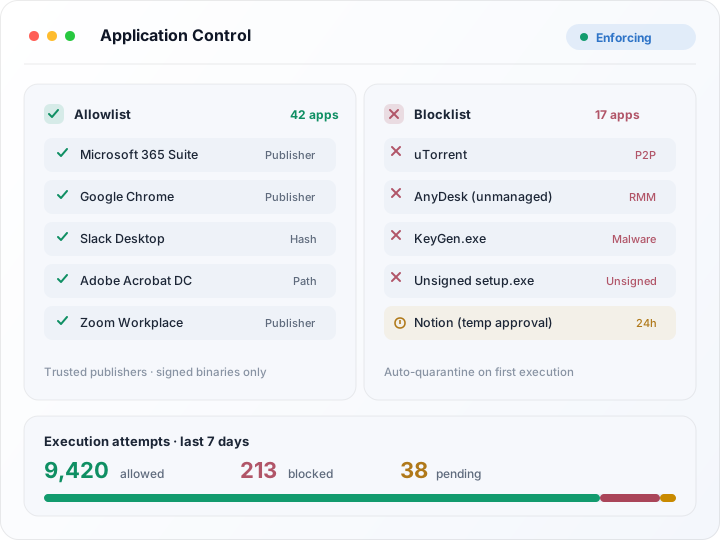
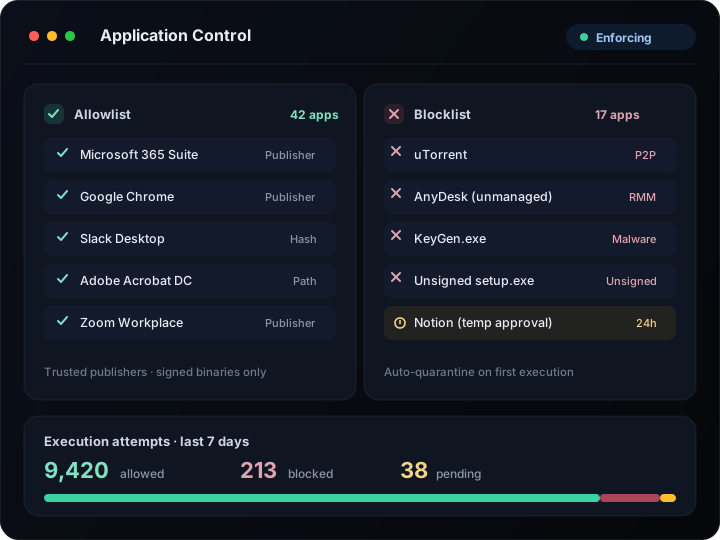
Control which applications can run on managed endpoints using allowlists, blocklists, trusted publishers, executable paths, and temporary approval workflows.
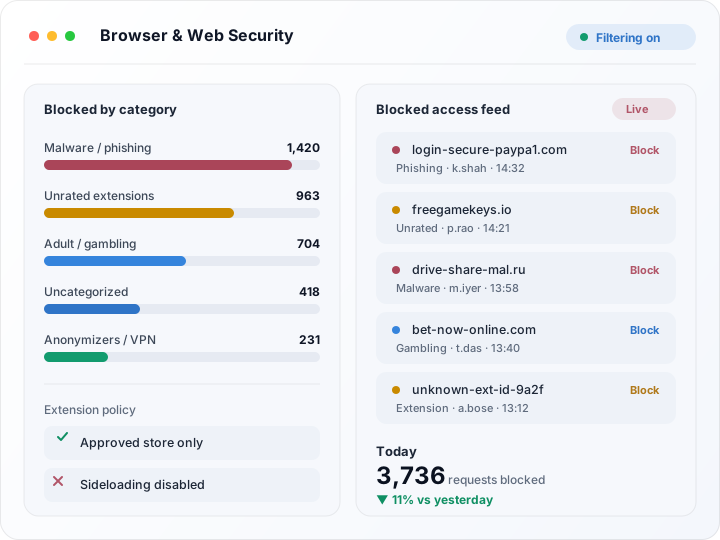
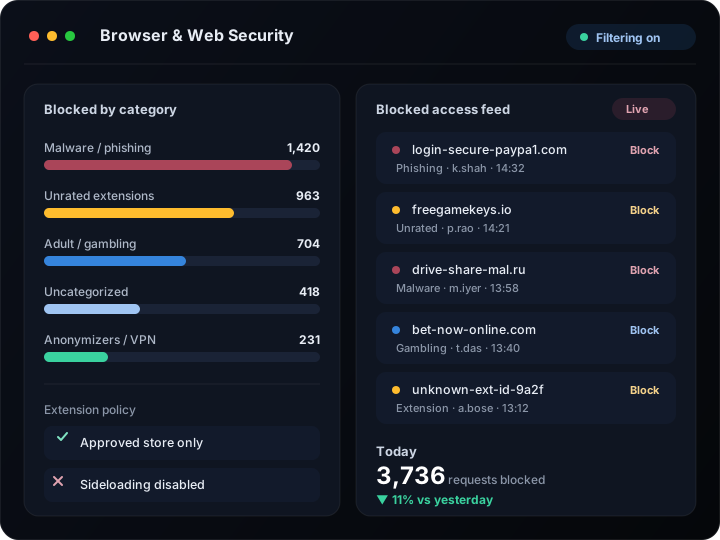
Manage browser extensions, enforce browser security settings, and restrict access to malicious, inappropriate, or non-compliant websites through centralized policy enforcement.
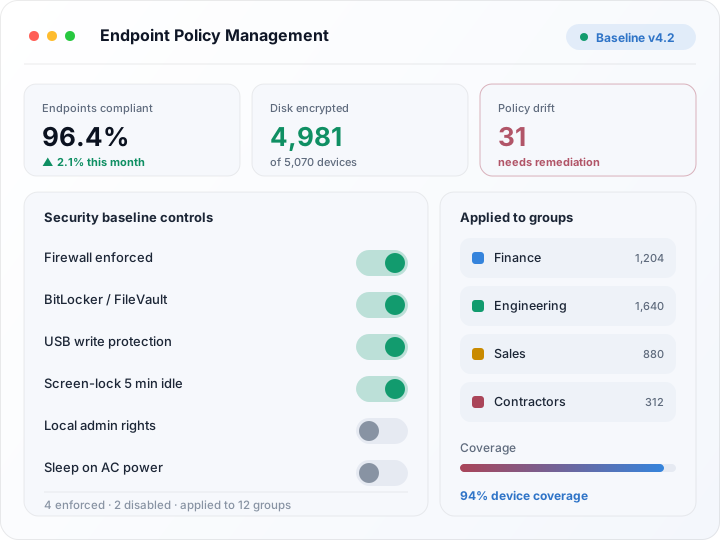
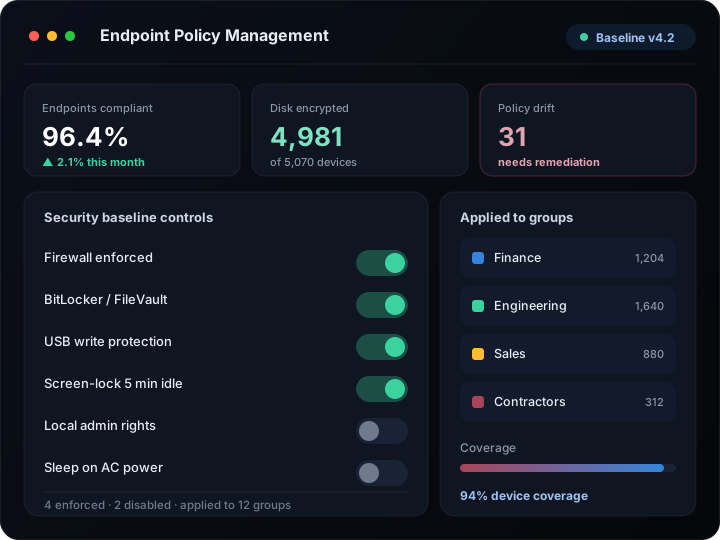
Centralize management of firewall rule settings, disk encryption policies, security baselines, power configurations, appearance policies, and endpoint protection settings.
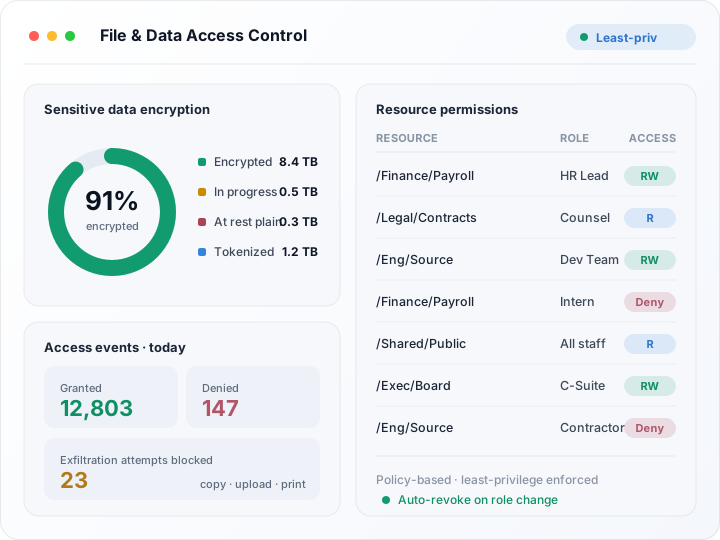
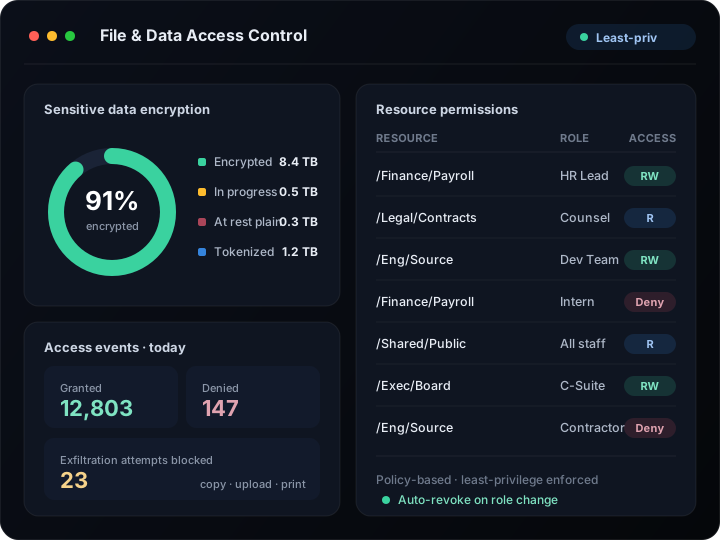
Control access to files, folders, and sensitive resources through policy-based permissions and security controls that reduce unauthorized access and data leakage.
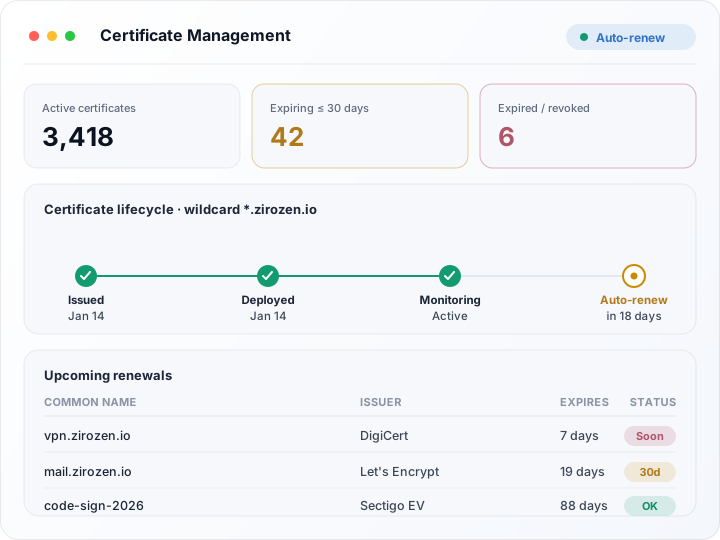
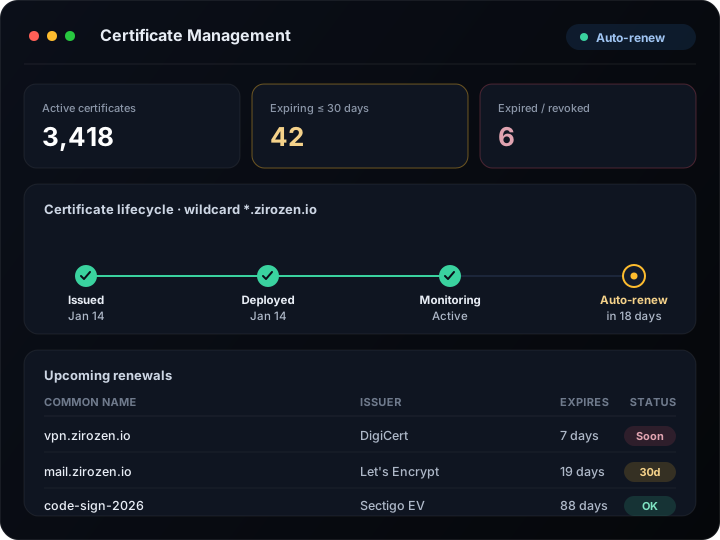
Deploy, monitor, renew, and manage certificates across endpoints to support secure authentication, encryption, and compliance requirements.
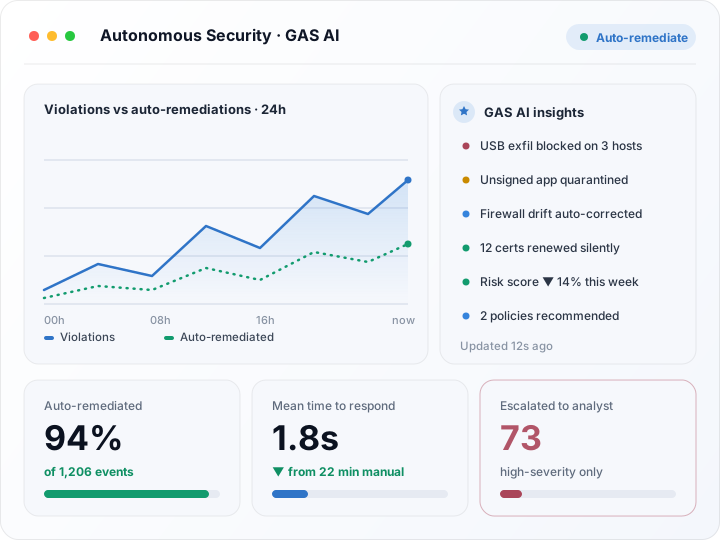
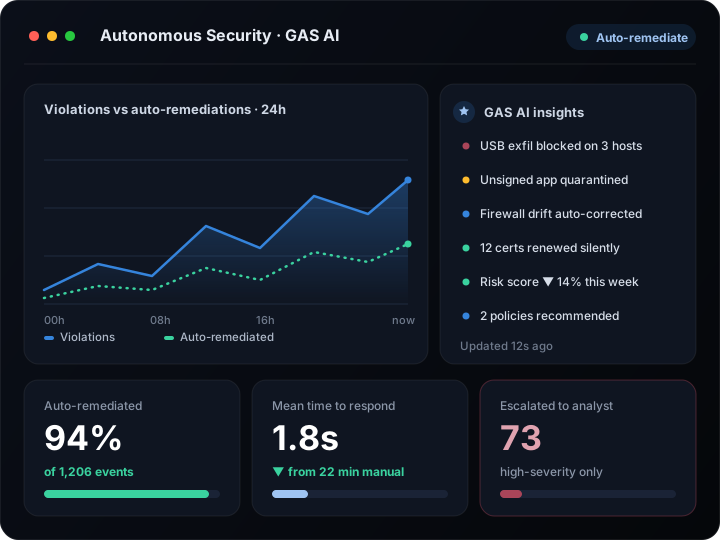
GAS AI continuously monitors endpoint activity, identifies policy violations, recommends corrective actions, and automates remediation workflows to strengthen security and reduce operational burden.
Unmanaged devices and shadow IT silently widen your attack surface, but automated device control turns blind spots into continuous, enforced visibility.
Auto-detect and remediate critical vulnerabilities.
Continuously monitor CIS, PCI DSS, HIPAA and custom controls.
Identify threats and automatically trigger containment.
Proactively detect and resolve issues impacting user productivity.
Track expirations and automate certificate renewals.
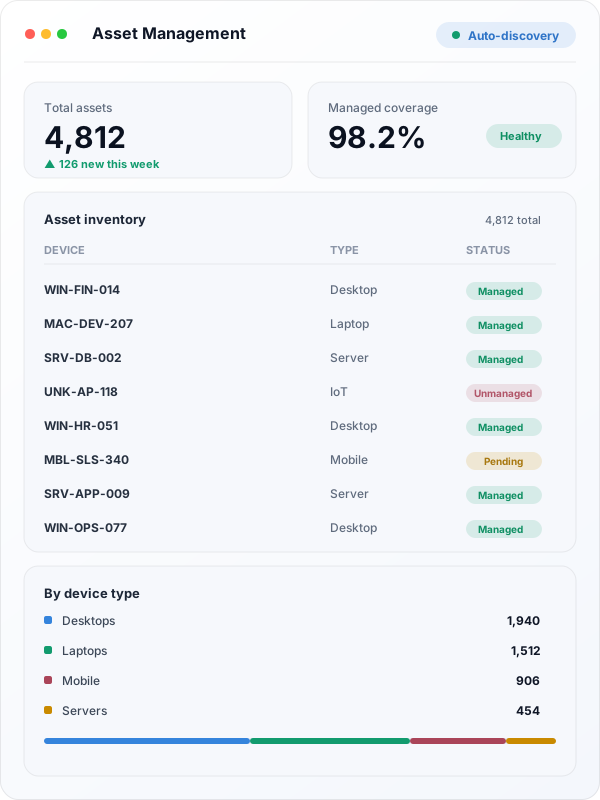
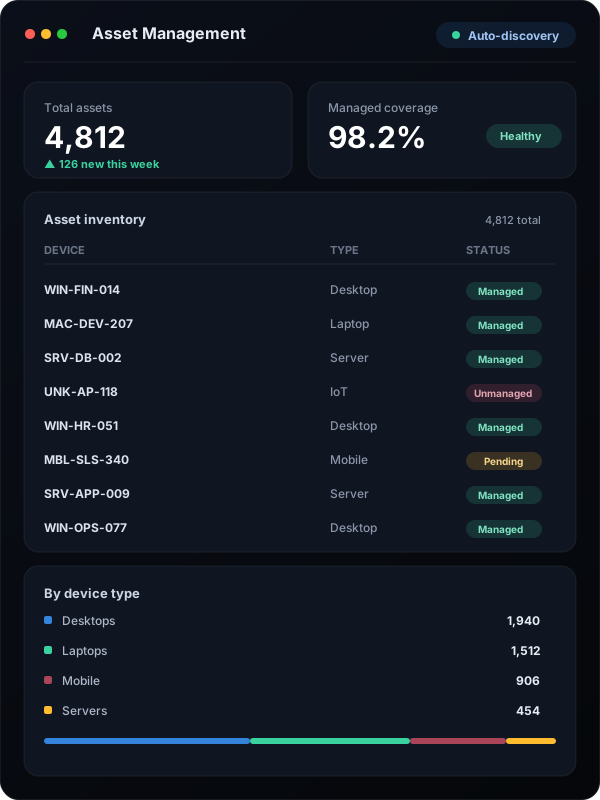
Surface unmanaged devices and unauthorized software across your environment.
Powerful capabilities to secure, manage and automate your entire endpoint environment.
Automate OS and third-party patching to eliminate vulnerabilities and keep your endpoints secure and up to date.
Automated Patching
Ring Deployment
Patch Policies
Rollback & Recovery
Detailed Reporting
Frequently Used Together
These features work even better together to deliver maximum security and efficiency.
by bringing together other tools
Empower your business with a rich ecosystem of integrations that unify operations, automate processes, and enhance productivity.

Expert guidance, product updates, and best practices for autonomous IT & security operations.
Move from manual, static enforcement to automated, intelligent device control.
Traditional
Device Control
AI-Powered
Device Control
Manual policy enforcement
Policies are applied and updated by hand.
Automated policy enforcement
Policies are applied and enforced automatically across endpoints.
Reactive security controls
Controls respond only after a device risk is exposed.
Proactive risk prevention
Risks are identified and blocked before they cause harm.
Limited device visibility
Connected devices go unmonitored or unnoticed.
Continuous endpoint monitoring
Every device is tracked and assessed in real time.
Static configurations
Fixed settings don't adapt to changing risk or context.
Dynamic policy management
Policies adjust automatically based on real-time risk.
Manual investigations
Analysts manually trace and review device activity.
AI-assisted analysis
AI correlates device activity and surfaces real threats.
Multiple management tools
Disconnected tools fragment device oversight.
Unified security platform
One platform manages, monitors, and secures every device.
Device Control is a cybersecurity capability that allows organizations to manage and restrict access to removable media, USB devices, peripherals, applications, browsers, and endpoint resources. Device control helps prevent data loss, reduce insider threats, enforce security policies, and maintain compliance across managed endpoints.
Organizations can control USB drives, external storage devices, printers, Bluetooth devices, removable media, and other connected peripherals.
Device control prevents unauthorized file transfers, removable media usage, and external device access that could lead to data exfiltration.
Application control allows organizations to define which applications are allowed or blocked on managed endpoints, helping reduce malware and unauthorized software risks.
Yes. Device control helps organizations meet compliance requirements for PCI DSS, HIPAA, NIST, CIS Benchmarks, ISO 27001, SOC 2, and other security frameworks.
Yes. EndpointOps can manage browser extensions, browser configurations, URL filtering policies, and web access restrictions.
Yes. EndpointOps continuously monitors endpoints and automatically applies security policies and remediation actions when violations are detected.
GAS AI analyzes device activity, policy violations, security risks, and endpoint behavior to automate investigations, recommend actions, and accelerate remediation.